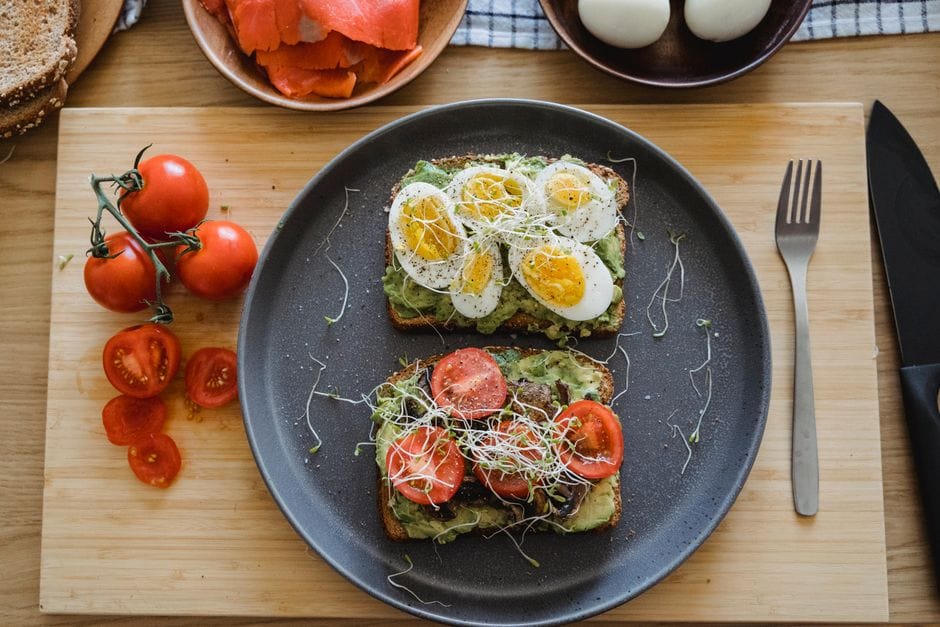
Protein has had a strange journey in women's nutrition — for years it was quietly framed as a man's concern, something for bodybuilders and gym bros, while women were sold low-fat yoghurts and 100-calorie snack packs. The result is that a great many women eat noticeably less protein than their bodies need, and feel the effects as constant hunger, poor recovery, and muscle that slips away faster than it should with age. You do not need powders or a complicated regime to fix this. You need to know your number and build meals around it.
How much you actually need
The official minimum to avoid deficiency is around 0.8 grams of protein per kilogram of body weight, but that floor was set to prevent illness, not to help you thrive. For maintaining muscle, managing appetite, and supporting an active life, the evidence points considerably higher — most active women do well on roughly 1.2 to 1.6 grams per kilogram of body weight per day. For a woman weighing 65kg, that lands somewhere between about 78 and 104 grams a day, which is a lot more than a splash of milk and a handful of nuts will get you to.
Spread it across the day rather than saving it all for dinner. Your body uses protein best in doses of roughly 25 to 30 grams per meal, so three solid hits beat one giant steak at 8pm.
Why it matters more as you age
From your mid-thirties onward you gradually lose muscle mass, and the decline accelerates through the perimenopausal and menopausal years as oestrogen falls. Muscle is not just about strength — it underpins your metabolism, your bone health, your balance, and how well you age. Protein is the raw material your body uses to hold onto that muscle, and the need actually rises rather than falls as you get older. The woman eating enough protein and lifting weights in her fifties is making a deposit she will be very glad of in her seventies.
This is the rare nutrition message that gets more important with age, not less. Treat protein as non-optional from forty onward.
Where to get it without supplements
You can hit your target on real food alone, and it is cheaper and more satisfying than chasing it with shakes. Some reliable sources and roughly what they deliver:
- Greek yoghurt — around 10g of protein per 100g, and a far better breakfast base than sugary cereal.
- Eggs — about 6g each, endlessly versatile, and one of the cheapest protein sources going.
- Chicken breast — roughly 31g per 100g cooked, the workhorse of high-protein eating.
- Lentils, chickpeas, tofu and tempeh, which let you hit the target comfortably without meat — a tin of lentils is not glamorous, but it quietly does the job.
- Cottage cheese, tinned fish, and edamame for the days you need protein without cooking.
If you genuinely struggle to eat enough whole food — common around menopause, when appetite and digestion shift — a simple whey or plant protein powder in a smoothie is a sensible top-up, not a moral failing.
Building it into real meals
The practical trick is to ask one question of every meal: where is the protein? Start there and build the plate around it, rather than treating it as the afterthought next to a mountain of pasta. Front-load breakfast in particular, because a protein-light breakfast sets up mid-morning hunger and the biscuit-tin raids that follow. Get this one habit right and the appetite control, the steadier energy, and the preserved muscle follow almost on their own.
A day that hits 100 grams without trying
Numbers on a page are easy to ignore, so here is what hitting roughly 100 grams actually looks like across a normal day — no shakes, no weighing every morsel, just protein placed at each meal.
- Breakfast: Greek yoghurt with berries and a spoon of seeds, plus two scrambled eggs — around 30g, and you walk into the morning without the 11am biscuit craving.
- Lunch: a chicken or chickpea salad with a real portion of the protein, not a token sprinkle — around 30g.
- Snack: a handful of edamame, a boiled egg, or a small tub of cottage cheese — around 12g, and the thing that stops the pre-dinner grazing.
- Dinner: salmon, tofu, or lean mince with vegetables and a carb — around 30g.
That is comfortably over 100 grams, spread the way your body uses it best, and it is mostly a matter of making protein the deliberate centre of each plate rather than the garnish. Notice that breakfast does the most work — a protein-light start is the single biggest reason people fall short by bedtime and snack their way through the gap. Front-load it there and the rest of the day looks after itself. If a day runs away from you, a tin of tuna, a pot of skyr, or a couple of eggs will quietly rescue your total without any planning at all.
Hit a rough total most days and you will feel the difference in your hunger and energy long before you see it anywhere else — give it a fortnight before you judge it.
Protein is not a men's issue, a gym issue, or a diet-culture issue — it is one of the few nutrition basics that genuinely changes how you feel day to day and how well you age. Work out your number, aim for 25 to 30 grams a meal, build each plate around a real source, and you will likely notice the difference in your hunger and energy within a fortnight.