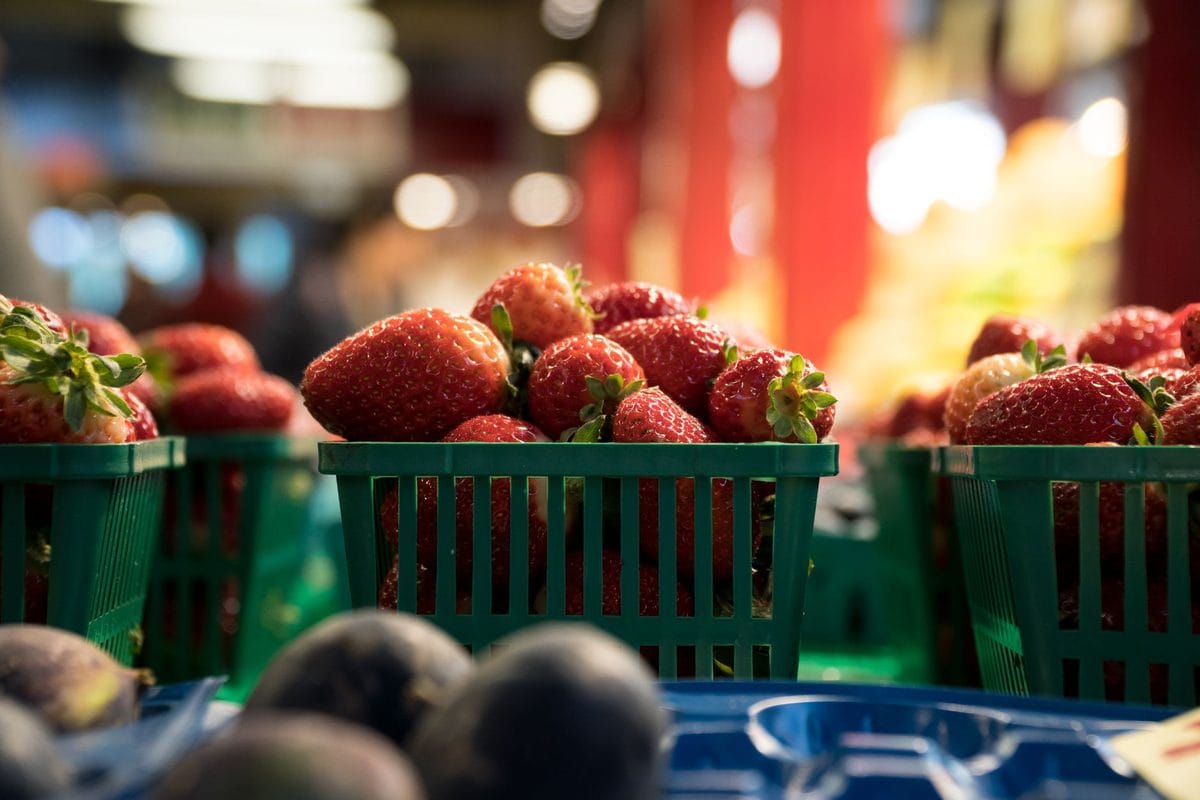
There's a specific kind of guilt that lives at the back of the fridge in June. You bought the strawberries because they smelled incredible at the stall, you grabbed the bag of spinach because you meant to eat more greens, and four days later half of it has gone soft and the other half is a sad green puddle. The produce was good. The plan was the problem.
Early summer is genuinely the best stretch of the year for eating well on a budget, because the things that taste best right now also happen to be cheap and nutrient-dense. The catch is that June produce is fragile. Berries and tender greens were never built to sit around. So this is less about virtue and more about timing: what's actually worth buying this month, what you can skip, and how to get it eaten before it turns.
Why June produce is worth the trouble
Fruit and vegetables don't sit still nutritionally. Vitamin C in particular starts dropping the moment something is picked, and warm storage speeds that up. A strawberry eaten the day you buy it from a local grower can carry noticeably more vitamin C than one that flew across an ocean and spent a week in cold chains and on shelves. You can't see that difference, which is exactly why "in season and local" is one of the few food rules that earns its keep.
The seasonal stars in June are worth knowing by name. Strawberries are at their cheapest and sweetest, which matters more than it sounds, because a sweet berry needs no added sugar to be a dessert. Fresh peas and broad beans show up for a short window and bring real plant protein along with folate, which is one of the nutrients women of reproductive age are most often told to watch. Leafy greens like spinach, chard and the first lettuces are tender and mild now, before summer heat turns them bitter. Cherries, apricots and the earliest courgettes round it out.
None of this requires a special diet. It's just that the cheapest produce on the stall in June is also some of the most useful, and that overlap doesn't happen every month.
What to actually buy (and what to leave)
Buying seasonally only saves money if you don't also buy the out-of-season stuff at a markup out of habit. A few honest calls for this month:
- Buy strawberries loose, not in the big clamshell. The pre-packed punnets almost always hide a crushed, bruising layer at the bottom, and that one soft berry spreads mould fast. Pick your own and you'll waste less.
- Buy peas in the pod if you have ten spare minutes. Podding peas is the kind of small task that's oddly satisfying, and shelled fresh peas are dramatically better than the bagged frozen ones for eating raw or barely cooked.
- Skip the imported asparagus. Its window is basically closing, and June stems are often woody and tired. Save the splurge for next spring.
- Greens: buy what you'll eat in three days, not a week. A smaller bunch you finish beats a giant bag where the bottom third liquefies. This is the single most common waste trap, so it's worth the restraint.
One thing I won't pretend about: frozen berries are not the enemy. They're picked and frozen at peak ripeness, the vitamin C holds up well, and they cost a fraction of fresh in winter. Fresh-in-June is the treat. Frozen is the workhorse the rest of the year. Both belong in the freezer.
The part everyone skips: storing it right
Most produce waste isn't a willpower failure, it's a storage failure. A few specifics that change the maths:
Berries hate moisture and they hate being washed early. Leave them dry and unwashed in the fridge, and only rinse the handful you're about to eat. If you want them to last, a quick dunk in a bowl of water with a splash of white vinegar (roughly one part vinegar to three parts water), then a thorough dry, knocks back the surface mould spores and can buy you a couple of extra days. Dry them properly afterwards, though, because wet berries spoil faster, not slower.
Tender greens want the opposite of what most people do. They wilt because they're losing water, so wrap them loosely in a clean tea towel or paper towel inside their bag or a box. The towel absorbs excess moisture while the greens stay humid enough not to dry out. Sad, floppy spinach can often be revived with fifteen minutes in a bowl of cold water before you write it off.
Peas and broad beans are the exception that proves the rule: their sugars turn to starch quickly after picking, so they genuinely are best eaten within a day or two. If you can't, blanch and freeze them the day you buy them rather than letting them sit.
Simple ways to actually eat it
The fastest way to waste good produce is to save it for a recipe you never get around to making. The fix is to have two or three no-recipe moves ready so the food gets used on autopilot.
For berries, the easiest one is to stir a handful into plain yogurt with a few crushed nuts. That single bowl pulls in protein, fibre and the berries' vitamin C in about ninety seconds, and it works for breakfast or an afternoon slump equally well. When strawberries are getting a touch too soft to look pretty, that's exactly when they're best mashed into yogurt or onto toast, so don't bin them at that stage.
For greens, stop thinking of them as a side and start wilting them into things you're already cooking. A big handful of spinach or chard disappears into scrambled eggs, a pasta sauce, or a bowl of lentils with almost no effort, and it's a far more reliable way to eat greens than committing to a salad you have to assemble. Raw lettuces this month are tender enough to eat dressed simply with good oil and a squeeze of lemon, no elaborate salad required.
Fresh peas barely need cooking. Tip them raw into a grain bowl, or warm them through for a minute with a little butter and mint. They bring sweetness and a small but real hit of plant protein, which is handy on the days a meal otherwise leans heavily on carbs.
A realistic week, not a perfect one
You don't have to overhaul anything to get the benefit here. Buy a little less than you think you'll eat, store the berries dry and the greens wrapped, and keep one easy way to use each on hand. That's genuinely the whole system.
The point of eating with the season isn't moral. It's that June hands you sweet, cheap, nutrient-rich food for a few short weeks, and a fridge full of soft fruit and slimy greens is just money you already spent going in the bin. Eat the strawberries while they smell like that. They won't next month.