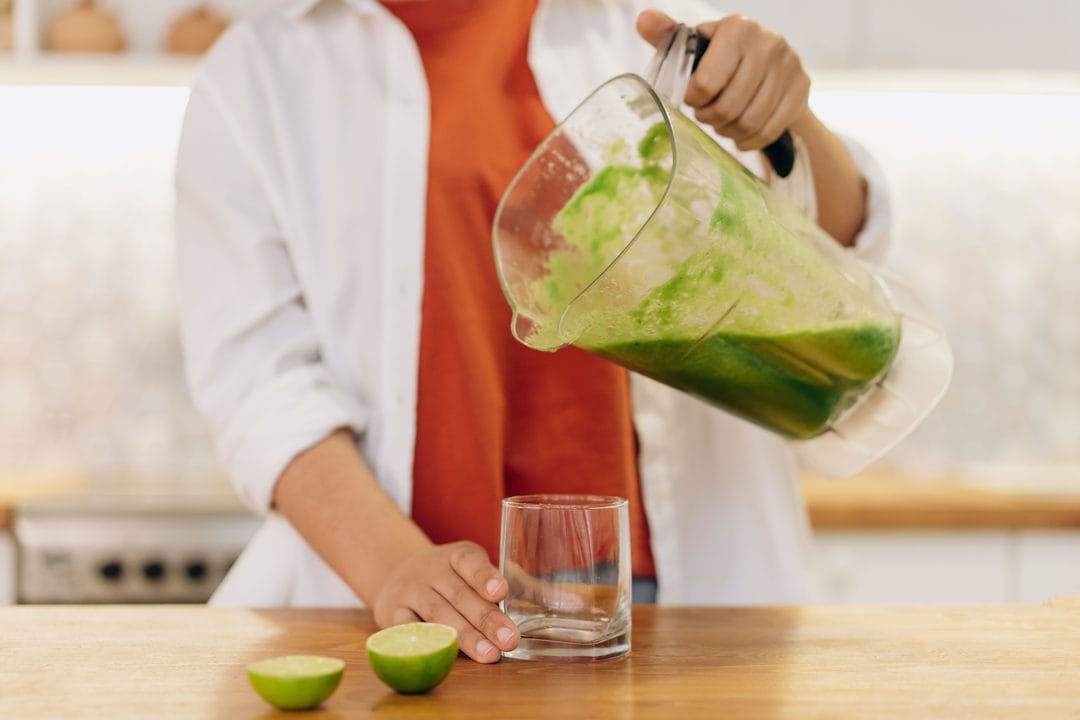
Every June, somewhere between the first heatwave and the first "beach body" ad retargeting your Instagram feed, the same product reappears: a $65 three-day juice cleanse promising to "flush toxins" and "reset your liver." Goop-adjacent brands, MLM-adjacent brands, and at least one influencer whose entire platform is a green smoothie in a mason jar all sell some version of it. Here's why the pitch works: it sounds mechanical and fixable, like your body is a drain that clogged over spring and now needs a $9-a-bottle rinse. It isn't, and it doesn't.
Your liver processes roughly 1.5 liters of blood a minute, non-stop, whether you've slept eight hours or four. Continuously, it neutralizes ammonia, metabolizes alcohol, breaks down medications, stores glycogen, and produces bile — around 800 to 1,000 milliliters of it a day — to help digest fat. And it does all of this without a juice cleanse, without a $40 "detox tea," and without your input at all. This is the part the marketing quietly skips: the organ being sold to you as sluggish and in need of rescue is, in a person without diagnosed liver disease, already running a 24-hour shift with no breaks. If anything, a three-day juice fast doesn't give it a rest at all. Sudden low-protein, low-fiber liquid fasting instead forces the liver to pull glycogen and amino acids from muscle just to keep your blood sugar stable — which is the opposite of restful.
What "Toxins" Actually Means in These Ads (Nothing)
Ask any brand selling a cleanse to name the specific toxin it removes, with a blood test showing before-and-after levels, and watch the copy go vague within a sentence.
That's because the word is doing marketing work, not biological work. Yet real detoxification pathways do exist — Phase I and Phase II liver enzymes, kidney filtration, glutathione conjugation — and they run on specific inputs: protein, B vitamins, sulfur-containing amino acids, and enough total calories that your body isn't in triage mode. None of that requires celery juice at 6 a.m. Instead, it requires eggs, beans, and enough sleep that your liver isn't also compensating for a stress response.
The kidneys get roped into the same pitch, usually pictured as a woman holding lemon water against a sunrise. Roughly 180 liters of blood plasma move through them a day, and the kidneys reabsorb about 178.5 liters of it, fine-tuning sodium, potassium, and pH as they go. A wedge of lemon in water does not "alkalize" your blood — your blood pH sits at 7.35 to 7.45, held there by your lungs and kidneys regardless of what you drink, and if it moved outside that narrow band from diet alone, you'd be in a hospital, not reading a wellness newsletter. Still, the lemon water isn't harmful — it's just not doing the job the caption says it is.
None of this means whole fruits and vegetables are pointless — the opposite is true, and that's the frustrating part of the whole trend. But the plants themselves are good. The delivery mechanism, and the mythology built around it, is what's broken.
The Specific Products Wasting Your Money
- Three-day cold-pressed juice cleanses in the $150-$250 range (Pressed, Juice Press, and similar chains all sell versions of this) strip out fiber and deliver a slug of fruit sugar with almost no protein or fat to slow absorption — you'll likely feel shaky by day two.
- "Liver detox" supplement blends built around milk thistle and dandelion root, often $30-$45 a bottle, have some preliminary human data for milk thistle in existing liver disease, but essentially none showing benefit for a healthy liver in someone without a diagnosis.
- Activated charcoal lemonades, sold at $6-$8 per bottle in some juice bar chains, bind indiscriminately in the gut — including your medications and, if you're on hormonal birth control, potentially reducing its absorption. That one's worth reading the label on before you order it with lunch.
- Teatox blends marketed for "bloat and detox" frequently contain senna, a stimulant laxative; the sensation of being "lighter" the next morning is water loss and bowel clearing, not fat loss or toxin removal, and regular use of stimulant laxatives can mess with your electrolytes.
Add it up, and a habitual cleanse-and-teatox routine can run $200 to $300 a month on products engineered to produce a temporary, mostly digestive sensation of "lightness" that has nothing to do with liver or kidney function. That money, redirected, buys a lot of actual food.
What Actually Supports the Work Already Happening
So what does support the organs actually doing this work? Start with protein, because Phase II liver detoxification pathways run on amino acids — particularly the sulfur-containing ones in eggs, poultry, fish, and legumes, which the liver uses for glutathione conjugation, its primary method for neutralizing byproducts of ordinary metabolism. A woman eating a cleanse-brand smoothie for breakfast is often getting 3 to 6 grams of protein; two eggs and a slice of sourdough gets her to roughly 15 grams, which is the number that actually matters here. Specifically, cruciferous vegetables — broccoli, Brussels sprouts, cabbage, bok choy — contain glucosinolates that support those same Phase I and Phase II pathways, and eating them whole keeps the fiber that also feeds the gut bacteria involved in processing hormones and bile acids. A cup of chopped broccoli, roasted with olive oil and eaten with dinner three or four times a week, does more for you than a $65 cleanse kit, and it costs about $1.50. And you don't need a supplement aisle to get there — a rotisserie chicken and a bag of pre-washed kale from the same grocery run covers both boxes for under $12.
Fiber deserves its own paragraph, because the "flush" framing gets the mechanism backward. You don't flush your gut with liquid; you clear it with bulk. Soluble fiber from oats, beans, and psyllium binds bile acids in the intestine and carries them out, one of the actual mechanisms by which your body clears cholesterol byproducts — something a fiber-free juice cleanse cannot replicate no matter how green it is. Under a dollar a serving, a bowl of oatmeal with a tablespoon of ground flaxseed does more of that specific job than any bottled cleanse on the market.
What to Actually Put in the Blender, if You Still Want a Smoothie
There's nothing wrong with a smoothie as a format — the problem is what most detox brands put inside it. Build one with a base of whole fruit, a full serving of leafy greens, a fat source like half an avocado or a tablespoon of nut butter, and a scoop of plain Greek yogurt or whatever protein powder you'd use on a normal Tuesday. That version keeps the fiber intact, adds protein to blunt the sugar spike, and drops the mystique entirely. And it skips the three-day fasting protocol entirely, doesn't ask you to give up food otherwise, and won't leave you light-headed by 2 p.m.
Skip anything labeled a "master cleanse," which usually means lemon juice, maple syrup, and cayenne pepper for several days with no solid food — a 1940s protocol with no updated safety data behind it and a well-documented pattern of triggering binge-restrict cycles afterward. If a product's entire pitch rests on the word "flush," that's the signal to close the tab.
None of this is a case against fresh produce, and it's genuinely not about willpower or discipline — it's about which mechanism is actually doing the work. Buy the vegetables, skip the ceremony built around them.
One honest caveat, because the internet doesn't love nuance on this topic: people with diagnosed fatty liver disease, gallbladder issues, or specific kidney conditions do sometimes benefit from medically supervised protocols that look, on paper, similar to a "cleanse" — lower fat, specific fiber targets, structured meal timing. But that's a clinical intervention prescribed by a hepatologist or nephrologist based on bloodwork, not a $65 kit from a wellness influencer's storefront, and the two should never be confused with each other.
Your liver isn't waiting on you, and it never was. Feed it protein, cruciferous vegetables, fiber, and enough sleep to keep your cortisol from making its job harder — and leave the $65 for something that isn't already happening for free, every minute, whether you buy the bottle or not.