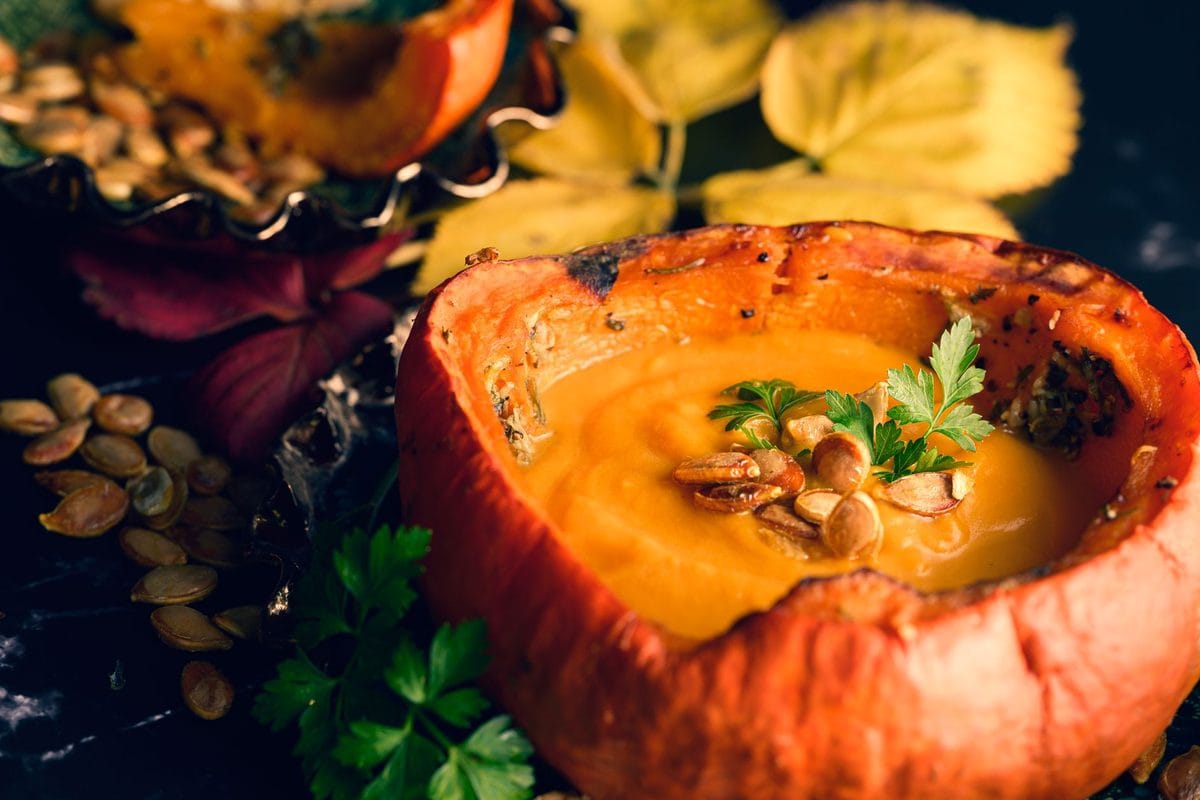
Starbucks' own nutrition page for a grande Pumpkin Spice Latte lists 390 calories, 50 grams of sugar and 0 grams of fiber. Pumpkin puree is in the sauce, though it sits third on the ingredient list, behind sugar and condensed skim milk. Some of those 50 grams is lactose from the milk, which is not the issue, but much of the remainder is added sugar, and the American Heart Association caps added sugar at 25 grams a day for most women (the NHS sets its free-sugar limit for UK adults at 30 grams). So the drink is a dessert that happens to share a name with a vegetable, and it tells you almost nothing about what the vegetable does. The vegetable is better than its reputation: a cup of plain canned pumpkin carries about 7 grams of fiber and more than two and a half times a woman's daily vitamin A requirement. Pumpkins are on every porch and supermarket display this month, which makes it the easy time to eat the real thing and to stop throwing the seeds in the bin.
What a Cup of Pumpkin Actually Delivers
USDA's FoodData Central gives the cleanest comparison, and one result surprises people: per cup, the can beats the fresh stuff. The reason is dull. Canned pumpkin is about 90 percent water while boiled fresh pumpkin is closer to 94 percent, so a cup of canned puree simply holds more pumpkin than a cup of the mashed, home-boiled kind.
| Food | Serving | Calories | Fiber | Key nutrients |
|---|---|---|---|---|
| Pumpkin, boiled and mashed | 1 cup (245 g) | 49 | 2.7 g | 564 mg potassium, 706 mcg RAE vitamin A |
| Pumpkin, canned, no salt | 1 cup (245 g) | 83 | 7.1 g | 505 mg potassium, 1,906 mcg RAE vitamin A |
| Pumpkin seed kernels (pepitas), roasted | 1 oz (28 g) | 163 | 1.8 g | 156 mg magnesium, 2.2 mg zinc |
| Whole pumpkin seeds in the shell, roasted | 1 oz (about 85 seeds) | 126 | 5.2 g | 74 mg magnesium |
| Grande Pumpkin Spice Latte (Starbucks) | 16 fl oz | 390 | 0 g | 50 g sugar |
Sources: USDA FoodData Central (SR Legacy entries for pumpkin and pumpkin seeds); NIH Office of Dietary Supplements for the seed magnesium and zinc figures; Starbucks US nutrition page for the latte.
Vitamin A is the headline number. The recommended intake for adult women is 700 micrograms of retinol activity equivalents (RAE) a day, and a cup of canned pumpkin supplies roughly 1,900, all of it as carotenoids that your body converts as it needs them. That distinction matters because the 3,000-microgram ceiling you may have seen applies to preformed vitamin A from liver and supplements, which our piece on retinol and beta-carotene covers in detail. The National Institutes of Health's Office of Dietary Supplements notes that no upper limit has been set for beta-carotene and the other provitamin A carotenoids, and that the usual effect of eating a great deal of beta-carotene over time is carotenodermia, a harmless yellow-orange tint to the skin that fades when you cut back. Beta-carotene pills are a separate matter: two large trials in smokers linked high-dose supplements to a higher risk of lung cancer, and the Food and Nutrition Board advises against them for the general population. Pumpkin also brings potassium, roughly 560 milligrams in a cup of boiled flesh, which is about a fifth of the 2,600-milligram adequate intake for women 19 and older (that figure does not apply if you have kidney disease or take a medication that affects how you excrete potassium, so ask your doctor before leaning on high-potassium foods). None of this makes pumpkin a treatment for anything, but it does make a cup of it at dinner a very efficient vegetable.
Buy the can that lists one ingredient. Plain pumpkin puree is just pumpkin, while pie filling or pie mix has sugar and spices added, which turns a vegetable into a dessert base before you've cooked a thing. Read the ingredient line rather than trusting the picture of a pie on the front.
The Seeds You Were About to Scrape Into the Bin
One ounce of roasted pumpkin seeds delivers 156 milligrams of magnesium, the top entry in the NIH's table of selected food sources for the mineral.
Adult women need 310 milligrams a day between ages 19 and 30 and 320 from 31 onward, so that single ounce, a small handful of the hulled kernels sold as pepitas, covers about half. The same ounce gives you roughly 2.2 milligrams of zinc against an RDA of 8, around 2.3 milligrams of iron against 18 for women 19 to 50 (it drops to 8 after 51), and about 8.5 grams of protein, all for 163 calories. Those are generous numbers for a snack, with a few catches attached. They describe hulled kernels, and seeds roasted whole in their shells, which is what you will get from your own pumpkin, come in nearer 74 milligrams of magnesium and 5 grams of fiber per ounce, because the shell adds fiber and dilutes everything else. Absorption is the second catch: the NIH explains that phytates, found in plant foods such as nuts, beans and whole grains, bind zinc in the gut and limit how much of it you absorb, and that plant iron is the nonheme kind, which your body takes up less readily than the iron in meat. Salted in-shell seeds from a bag are a different product again, since USDA's entry for them lists about 720 milligrams of sodium per ounce, nearly a third of the 2,300-milligram Daily Value printed on US labels. And while an ounce is a handful, a full cup of roasted kernels runs to roughly 680 calories, which is a lot of snack to eat absent-mindedly in front of a screen.
Pairing helps with the iron. Scatter the seeds over a lentil salad dressed with lemon, or eat a handful alongside a clementine, because the NIH notes that vitamin C improves the absorption of nonheme iron. What seeds will not do is fix a real iron shortage; if you have been exhausted for weeks, ask your doctor for a blood test rather than snacking your way around it.
Roasting Seeds and Choosing the Right Pumpkin
Seeds from any pumpkin are fine to roast, a point both Michigan State University Extension and the University of Nebraska–Lincoln make. The method Nebraska passes along comes from the National Center for Home Food Preservation at the University of Georgia: wash off the fibrous strands, dry the seeds (in a 150°F oven for three to four hours, or in a dehydrator at 115 to 120°F for one to two hours), toss them with oil and salt, pepper, garlic or cumin, and roast at 250°F for 10 to 15 minutes. Let them cool, then keep them in a sealed container at room temperature. Plenty of food blogs roast hotter, at 325 to 350°F, but the low-and-slow route is the one with a university food-preservation center behind it, so follow that.
The pumpkin itself is a separate decision. The Nebraska extension says a jack-o'-lantern pumpkin is edible if it is in good condition and has not been carved, but its flesh is stringier and more watery, while the small sugar or pie pumpkins are sweeter, less stringy and deeper in color. Once a pumpkin is carved, Michigan State University Extension treats it as a perishable food: left out for more than two hours in the 40 to 140°F range, bacteria on the cut surfaces can double every 20 minutes, and a cold night does not cancel out a warm afternoon in the sun. Buy a pie pumpkin for the kitchen, scoop the seeds out of the carving pumpkin the day you cut it, and do not cook anything from a jack-o'-lantern that has been sitting on the porch.
Cooked puree keeps three to four days in the refrigerator, according to Nebraska's guidance, and it freezes well. Portion it into one-cup bags or containers with half an inch of headspace and it keeps for up to a year, and you can swap it one-for-one into any recipe that calls for canned pumpkin. Freeze it rather than canning it: the National Center for Home Food Preservation does not recommend home-canning mashed or pureed pumpkin or pumpkin butter, and the only method it publishes is pressure-canning one-inch cubes.
Getting Pumpkin Into an Ordinary Week
The NHS counts 80 grams of fresh, canned or frozen vegetables as one of your five daily portions, and a half-cup scoop of canned pumpkin weighs about 120 grams, so one scoop is already a portion and a half. That scoop disappears easily into things you would cook anyway: a pot of lentil soup, a batch of chili, a bowl of oatmeal with cinnamon, or the tomato sauce for Tuesday's pasta, where it thickens the sauce a little. Keep a jar of toasted seeds by the stove for soups and salads, and remember that a tablespoon or two is plenty when the seeds are salted.
If the latte is a ritual you enjoy, keep it and treat it as the dessert it is. For the rest of the month, though, roast one small pie pumpkin on a Sunday, freeze the puree in one-cup bags, and dry the seeds on a tray in the oven beside it. You will have soup starters in the freezer and a snack jar on the counter, and the only thing you will have given up is the whipped cream.