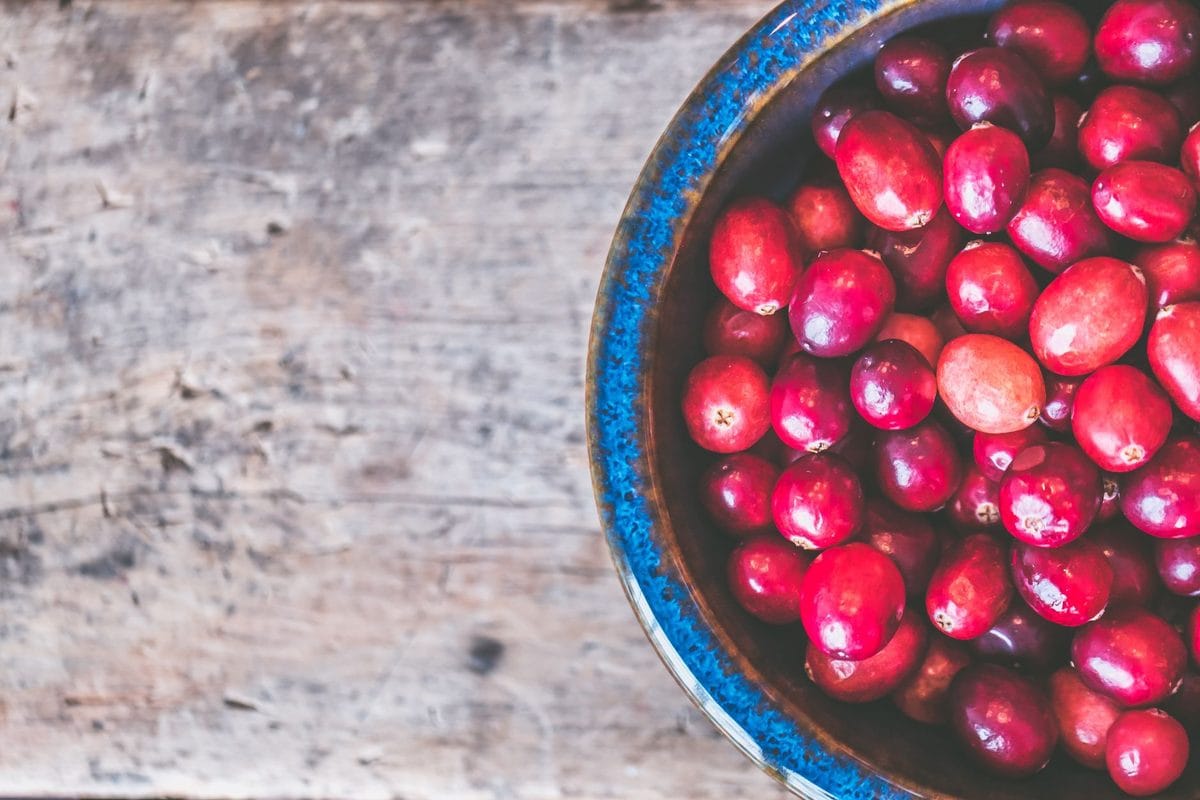
In its 2025 update, the American Urological Association moved cranberry from something clinicians "may offer" women with recurrent urinary tract infections to something they "should offer" as an option. Cranberry is also widely promoted for UTIs in general, including as a remedy once an infection has started, which is the one use the NIH's National Center for Complementary and Integrative Health says it is not recommended for. Both facts hold up once you read the studies, and with fresh berries reaching US stores this month (the National Center for Home Food Preservation puts the season at October through December), it is a good time to read them.
What the Biggest Review Actually Found
The 2023 Cochrane review led by Gabrielle Williams pooled 50 randomized trials with 8,857 participants. For women with recurrent UTIs, usually defined as two episodes of acute cystitis within six months or three within a year, eight trials covering 1,555 women found that cranberry products probably reduce symptomatic, culture-verified infections by about a quarter (relative risk 0.74, 95% confidence interval 0.55 to 0.99, moderate-certainty evidence). The same review found little or no benefit in older adults living in care facilities, in pregnant women (relative risk 1.06), and in adults whose bladders do not empty fully.
That 26 percent is a real signal, but it is neither large nor tight. The upper end of the confidence interval sits at 0.99, a hair from no effect at all, and the authors point out that six of the eight trials in women leaned toward cranberry while their individual intervals often crossed the line of no effect. Only about half of the included studies were judged relatively free of significant bias. Two trials that could be pooled compared cranberry with antibiotics (385 participants) and saw no clear difference, but the certainty is very low, so nobody should read that as permission to swap one for the other. The NIH puts the problem plainly: cranberry may help prevent symptomatic UTIs in some women, but its effectiveness is "still in question because of inconsistent findings."
Guideline writers looked at the same data and came down on the side of offering it. The 2025 amendment to the guideline from the AUA, the Canadian Urological Association and the Society of Urodynamics, Female Pelvic Medicine & Urogenital Reconstruction (SUFU) now reads, "Clinicians should offer cranberry as an option for prophylaxis for women with rUTIs," graded a moderate recommendation on Grade B evidence, up from a conditional recommendation on Grade C evidence in 2019. The word to notice is "option." It sits in the guideline beside vaginal estrogen therapy for perimenopausal and postmenopausal women, which clinicians are told to recommend when there is no contraindication, and beside a conditional suggestion to increase water intake for women who drink less than 1.5 liters (50 ounces) a day.
Juice, Capsules or Fresh Berries?
Cranberry is not one product in this research, and the results change with the form.
In the Cochrane analysis, 13 trials of juice or syrup (2,831 participants) found a reduced risk overall (relative risk 0.78, 95% CI 0.62 to 0.97), but in the six trials of women with recurrent UTIs the juice result was little or no clear difference (1,322 women, relative risk 0.84, 95% CI 0.63 to 1.10). Tablets and powders looked better on paper: three trials in 333 women with recurrent UTIs produced a relative risk of 0.45 (95% CI 0.28 to 0.72). It is tempting to conclude that capsules beat juice, and the review's authors decline to, because only one small trial compared the two head to head and found little or no difference. They offer two explanations for the gap. Cranberry juice is bitter, so people may stop drinking it, or a capsule may simply deliver a steadier dose of proanthocyanidins (PACs), the compounds believed to keep E. coli from sticking to the bladder wall. Nobody has pinned down the right dose: lab work suggests at least 36 milligrams of PACs a day, yet the trials could not show that low, moderate and high doses performed differently, and the authors call for products to be standardized and labeled for PAC content, a request that tells you how inconsistent the shelf currently is. The NIH adds that processing cranberries into tablets or capsules can lower the PAC concentration.
The FDA has declined to endorse any of this outright. In 2020, responding to a petition from Ocean Spray, it said it would not object to qualified claims for juice beverages with at least 27 percent cranberry juice (one 8-ounce serving a day) and for supplements with at least 500 milligrams of cranberry fruit powder a day, in healthy women who have had a UTI. The agency's own wording calls the evidence for juice "limited and inconsistent" and for supplements "limited," and dried cranberries and cranberry sauce are explicitly outside the claim.
The newest evidence leans toward the capsule, with strings attached. A 2025 trial in the American Journal of Clinical Nutrition randomized 150 women in Australia, all with a history of recurrent UTIs, to 500 milligrams a day of whole cranberry fruit powder or a placebo for six months. Culture-confirmed UTIs occurred in 13 of 73 women taking cranberry (17.8 percent) and 25 of 72 taking placebo (34.7 percent), an adjusted relative risk of 0.48 (95% CI 0.26 to 0.87). The catches: the study enrolled half the 300 women the team had planned for, the supplement maker Swisse Wellness sponsored it, and in the stricter per-protocol analysis the difference was no longer statistically significant (relative risk 0.60, 95% CI 0.32 to 1.14).
| Form | How the Cochrane review grouped it | FDA's 2020 qualified claim | Worth knowing |
|---|---|---|---|
| Juice or concentrate | "Juice or syrup" (13 trials overall) | Yes: 8 oz a day, at least 27% juice | Ocean Spray Original cocktail: about 110 calories and 25 g sugar per 8 oz |
| Capsules, tablets, powder | "Tablets or powder" (16 trials overall) | Yes: at least 500 mg fruit powder a day | PAC content is not standardized; supplements are not FDA-approved before sale |
| Fresh or frozen berries | No separate analysis | Not covered | Per 1 cup (100 g): 46 calories, 3.6 g fiber, 14 mg vitamin C |
| Sweetened dried cranberries | No separate analysis | Explicitly excluded | 1/4 cup: roughly 130 calories and 25 to 30 g sugar |
Sources: Williams et al., Cochrane Database of Systematic Reviews 2023; FDA letter of enforcement discretion, July 21, 2020; USDA FoodData Central (Cranberries, raw); manufacturer and retailer label listings for Ocean Spray products.
The Juice Aisle Has a Sugar Problem
Ocean Spray's Original Cranberry Juice Cocktail, the product most people picture when they hear "cranberry juice," lists 110 calories and 25 grams of sugar in an 8-ounce glass, 23 grams of it added, according to the label as shown by retailers such as Giant Food. The American Heart Association caps added sugar at 25 grams a day for most women, so one daily glass uses up nearly the whole allowance.
Skip the sweetened cocktail as a daily habit. If you decide to try cranberry for prevention at all, take the capsule route and pick one that states how many milligrams of cranberry fruit powder each dose contains, since 500 milligrams a day is the amount behind both the FDA's supplement claim and the 2025 trial. Talk to your clinician before you start, because supplements are held to looser rules than drugs: the NIH notes they are not approved by the FDA before they are sold.
What the Bag of Berries Is Good For
None of this is a reason to walk past the fresh berries, only a reason to buy them for the right job. Per USDA FoodData Central, a cup of whole raw cranberries (100 grams) has 46 calories, 3.6 grams of fiber, 14 milligrams of vitamin C (about a fifth of the 75 milligrams adult women need) and just over 4 grams of sugar. The Dietary Guidelines for Americans advise women to get 22 to 28 grams of fiber a day depending on age, and our piece on the fiber gap explains why many fall short, so a berry that supplies 3.6 grams for 46 calories earns a place in the kitchen regardless of what it does for the bladder.
Harvest runs from September through November, and the National Center for Home Food Preservation says the fresh fruit is in stores from October through December or early January. Choose berries that are bright red, firm and glossy, and discard any that are shriveled or soft. A bag keeps up to four weeks in the refrigerator crisper in its original packaging and up to a year in the freezer; after freezing, rinse the berries in cold water and drain them well. Raw cranberries are extremely tart, which is why they usually get cooked. Simmer a bag with the juice of an orange and a spoonful or two of maple syrup, adjusted to taste, until the skins split, and you have a sauce for oatmeal, yogurt or roast chicken in which you control the sugar.
When Cranberry Is the Wrong Tool
Cranberry is not a treatment. The NIH is explicit that it is not recommended for existing UTIs in any population, and that anyone who thinks she has one should see a health care provider for diagnosis and treatment. For women whose infections keep coming back, the AUA guideline begins with a full history and pelvic exam, then urinalysis and a urine culture with sensitivity testing before each symptomatic episode is treated. Fever and chills, nausea or vomiting, or pain in the back, side or groin alongside urinary symptoms are reasons, according to the NIH's kidney institute, to contact a health care professional rather than wait it out.
A few situations call for a conversation with a clinician before you add a cranberry habit:
- You take warfarin, since the NIH says the evidence on a cranberry interaction is conflicting.
- Pregnant or breastfeeding women: studies suggest food amounts are fine, but the NIH says the evidence is not conclusive for larger amounts, and the Cochrane review found no UTI benefit in pregnancy.
- Anyone planning to rely on D-mannose alone, because the 2025 AUA guideline says clinicians should tell patients it may not be effective for prevention.
- Infections that keep returning no matter what you try.
Very large amounts of cranberry can also cause stomach upset and diarrhea, according to the NIH, so more is not a better plan.
If you buy a bag this week, freeze it flat in its original packaging. The berries keep for a year, and after a cold rinse and a good drain they are ready to use, which is a better trade than the sweetened cocktail.