Ask ten women what a B vitamin does and most will answer with some confidence — B12 for energy, folate for pregnancy, biotin for hair. Ask about choline and the room usually goes quiet, even though the Institute of Medicine classified it as an essential nutrient with its own Dietary Reference Intake back in 1998, nearly three decades ago. It doesn't get a jar of its own on the supplement aisle the way magnesium or vitamin D do, and it rarely comes up in the "what should I be taking" conversation between friends. That absence is doing real damage: choline sits at the intersection of liver function, brain chemistry, and fetal development, and national dietary surveys keep finding that the large majority of adult women fall short of what they need. A 2016 analysis of NHANES data, published in the Journal of the American College of Nutrition, put the shortfall at roughly nine in ten Americans — pregnant women included, which is the group for whom the stakes are highest. If you've never once thought about your choline intake, you're in the majority, and that's exactly the problem this article is about.
What Choline Actually Does in Your Body
Choline is a precursor to acetylcholine, the neurotransmitter your brain uses for memory formation and muscle signaling, which is why researchers keep circling back to it when they study brain fog and sluggish recall. It's also the raw material your liver uses to package fat into VLDL particles and ship it out of the organ — without enough choline, fat starts accumulating inside liver cells, a process that can happen even in women who aren't overweight and eat what looks like a reasonably clean diet. Choline feeds into the same methylation cycle as folate and B12, which is part of why the three nutrients get discussed together so often in pregnancy research. During pregnancy specifically, choline crosses the placenta and gets funneled toward the developing fetal brain and spinal cord, working alongside folate rather than substituting for it, since the two nutrients support different, overlapping steps in neural tube formation.
Why Women Need More of It Than the Label Suggests
Most prenatal vitamins on pharmacy shelves don't include choline at a meaningful dose — some don't include it at all.
The National Institutes of Health sets the Adequate Intake for choline at 425 milligrams a day for nonpregnant women, climbing to 450 milligrams during pregnancy and 550 milligrams while breastfeeding, both higher than most standard prenatal formulas were originally built around. That's a meaningfully higher bar than most people clear through food alone, especially if eggs aren't a daily habit. Perimenopause adds another wrinkle: estrogen normally boosts the enzyme that lets the body synthesize some of its own choline internally, so when estrogen drops, dietary choline becomes more important, not less, at exactly the life stage when many women are cutting back on animal foods for other reasons. Take prenatal supplementation seriously enough to check the label yourself — don't assume a multivitamin has you covered. If a prenatal doesn't list choline as bitartrate or chloride salt with a three-digit milligram number next to it, it almost certainly isn't providing a useful amount, and food needs to make up the difference.
Memory, Menopause, and the Acetylcholine Connection
Acetylcholine's role in memory and attention has made choline a recurring topic in aging and cognition research, and the connection to menopause specifically comes from estrogen's effect on an enzyme called PEMT, which lets the liver manufacture some choline internally rather than relying entirely on food. Estrogen essentially subsidizes your body's own choline production, and when estrogen drops sharply during perimenopause and menopause, that internal subsidy drops with it — right around the same years many women report the "brain fog" that gets waved off as simply aging or stress. Researchers haven't established that choline supplementation reverses menopausal brain fog outright, and it would be dishonest to promise that; the evidence on direct cognitive outcomes from choline supplementation in perimenopausal women is still thin compared to something like the pregnancy literature. What the mechanism does support is a reasonable, low-risk case for making sure intake doesn't drop at the exact life stage when the body's own production capacity is declining — a different and more modest claim than promising choline will fix menopausal memory problems.
Where Choline Actually Comes From
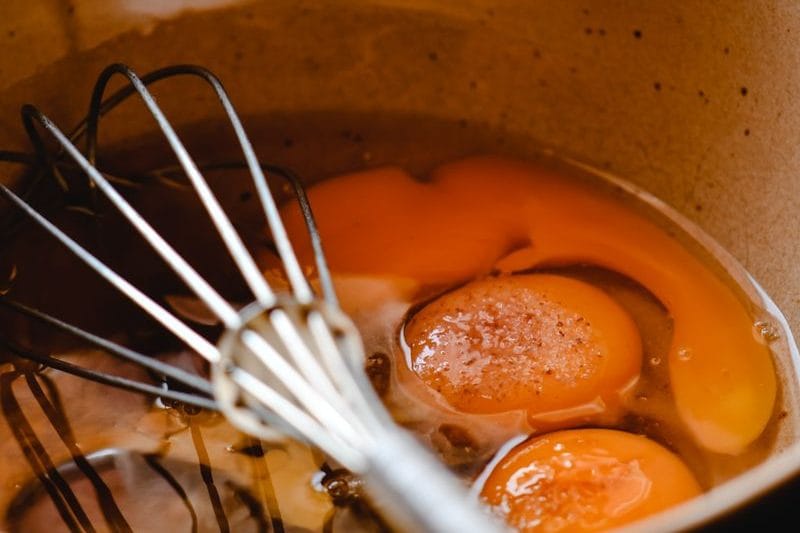
Eggs remain the most efficient source by a wide margin: a single large egg carries about 147 milligrams of choline, concentrated in the yolk, which makes the decades-long habit of ordering egg-white omelets one of the more self-defeating trends in the wellness world. Beef liver is the single richest common source of any food, though it's not exactly a regular Tuesday-night dinner for most households. A shortlist of what actually moves the number:
- Egg yolks — roughly 147 mg per large whole egg
- Beef liver is the single richest common source, though most households rarely cook it
- Soybeans and tofu, a realistic plant-based contributor if eaten most days rather than occasionally
- Cruciferous vegetables like broccoli and Brussels sprouts, which add smaller amounts that stack up over a week
- Salmon, chicken breast, and dairy — none of which get you there alone, but all of which help close the gap
Wheat germ and potatoes contribute smaller amounts too, among others, which is exactly why relying on any single food is risky. This is where the cholesterol scare of the 1990s and 2000s still casts a long shadow. The 2015–2020 Dietary Guidelines for Americans dropped the old 300-milligram daily cholesterol cap after research failed to show that dietary cholesterol from eggs meaningfully raised blood cholesterol in most healthy people, yet plenty of women are still ordering the egg-white version out of a habit formed a decade ago. Not everyone gets the green light here — women with certain genetic cholesterol conditions or existing cardiovascular disease should still talk to a doctor about egg frequency — but for most women without those specific risk factors, the old advice to limit whole eggs no longer reflects current guidance.
The Vegan and Vegetarian Blind Spot
Vegan and vegetarian women face the steepest climb here, since the two most concentrated sources, egg yolk and liver, are both off the table by definition. Soybeans, tofu, and quinoa provide some choline, and a diet heavy in cruciferous vegetables helps, but reaching 425 milligrams a day through plant foods alone takes deliberate meal planning rather than the kind of eating most people do on autopilot. This doesn't mean supplementation is mandatory for every plant-based woman; plenty manage it through consistent soy and legume intake plus fortified foods. It does mean the risk of falling short is real enough to be worth tracking for a few days rather than assuming it's fine by default.
What to Do About It
Start with food before reaching for a supplement bottle. Three or four whole eggs a week, a regular soybean or edamame habit, and not routinely discarding the yolk gets most non-pregnant women a meaningful share of the way to 425 milligrams without a single pill involved. Pregnant women and strict vegans are the two groups where food alone often isn't enough, and choline bitartrate or choline citrate supplements, typically dosed between 150 and 300 milligrams, are worth a direct conversation with an OB or dietitian rather than a guess based on an influencer's supplement stack. Skip the mega-dose approach some supplement brands push, too: doses above roughly 3,500 milligrams a day have been linked in research to a fishy body odor and blood pressure changes, so more is not automatically better here. The nutrient that never got its own aisle in the pharmacy is still worth checking for by name, the next time you're standing in front of a shelf of prenatal or multivitamin options, squinting at the ingredient panel.