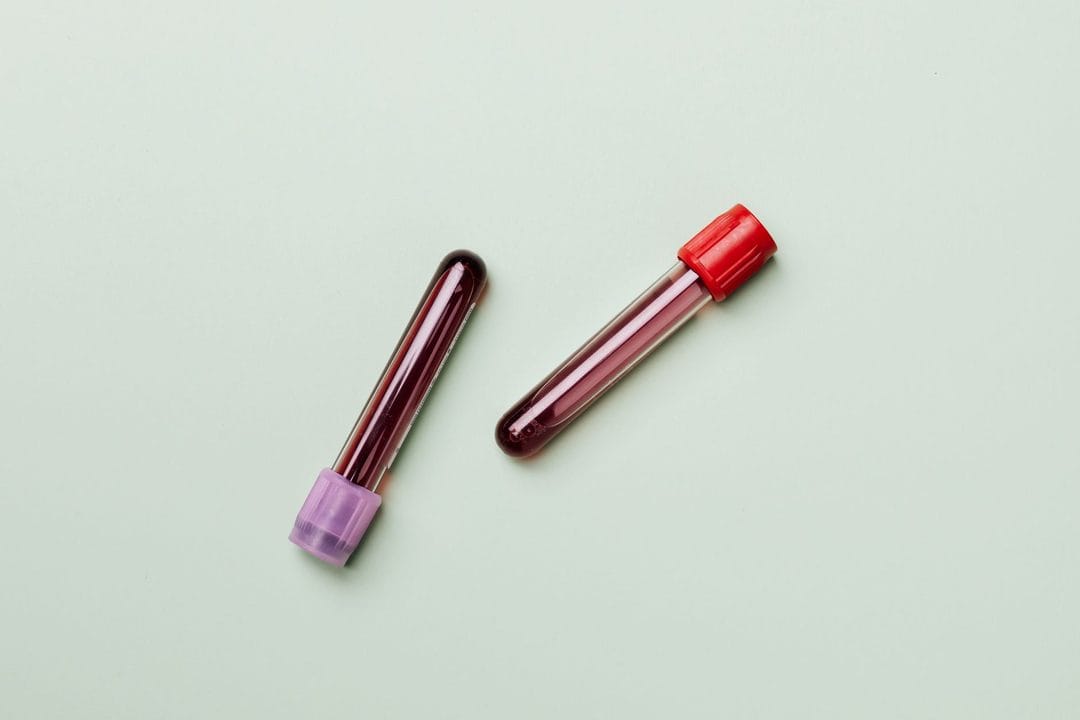
Picture the call. Your clinician's office phones a week after a routine blood draw, and the thyroid numbers look like textbook hyperthyroidism. You feel fine, your heart rate has not changed, and nothing in your history explains the result. Before anyone orders a repeat panel or a specialist referral, somebody should ask one question: are you taking biotin? For many women who buy hair, skin and nail gummies, the honest answer is yes, and the lab may never have been told.
That question matters because biotin can change blood test numbers without any warning on the report. This article covers what biotin does, why it interferes with certain lab methods, what the FDA has said about troponin and thyroid results, and what to do before your next draw.
What biotin does and how much you need
Biotin, also called vitamin B7, works as a cofactor for enzymes that help break down fats, carbohydrates and some amino acids. The NIH Office of Dietary Supplements lists an adequate intake of 30 micrograms a day for adults, and that figure assumes you already get some of it from food. Eggs, nuts, seeds, salmon, sweet potatoes and dairy all contribute, which is why a varied diet usually covers the requirement without a pill. Cooking does not destroy most of it, so a plate of scrambled eggs and a handful of almonds is a real intake, not a placeholder. A concentrated gummy taken every morning is a different exposure from the biotin in a salad, and the lab cannot tell the two apart.
Biotin is cheap, and for most people it is also unnecessary.
Real deficiency is uncommon in the United States. It shows up mainly in people with rare inherited enzyme disorders, in people who eat large amounts of raw egg white (the protein avidin binds biotin and blocks absorption), and occasionally in people on long-term anti-seizure medication. Hair thinning in an otherwise healthy woman is rarely a biotin problem. The products that cause trouble in the lab are the high-dose hair, skin and nail formulas, and those are the ones that land on bathroom shelves.
Why a supplement can change your blood results
Many modern lab tests use a sandwich immunoassay built on the very strong bond between biotin and streptavidin. The analyzer attaches a biotin-labeled antibody to the hormone or protein being measured, then pulls that complex out of the sample with streptavidin-coated beads and reads the signal. Biotin circulating in your blood competes for the same binding sites. When your serum biotin is high, the beads capture the target in the wrong amount, and the reported number shifts in a direction that depends on how that particular test is built. Manufacturers of these kits publish interference thresholds, but the threshold depends on the assay, and it is rarely printed on the report your clinician sees. The output looks like an ordinary measurement, with nothing on the page to tell you it is wrong. That is the core of the problem: the number is precise, but the question it answers has quietly changed.
For thyroid tests the usual pattern is a falsely low TSH together with a falsely high free T4 and T3. That combination mimics hyperthyroidism, and it can push a clinician toward treatment or toward a chain of follow-up tests you did not need. The problem is not limited to the thyroid. The FDA's testing guidance notes that biotin in samples from people taking more than the recommended intake can cause falsely high or falsely low results, depending on the test principle. Pregnancy hormone (hCG) assays are among the methods affected, so an unusual number on a routine panel can come from the bottle in the cabinet rather than from your body. A clinician who sees an odd thyroid pattern in a patient with no symptoms should check the supplement list before reaching for treatment. If the supplement is the cause, the usual fix is a repeat test after a washout, not a prescription.
The troponin warning
Troponin is the blood marker doctors use to help rule a heart attack in or out, and it is the test where biotin interference carries the highest stakes. The FDA issued its first safety communication on November 28, 2017, and updated it on November 5, 2019. The concern is falsely low troponin results, which can mean a real heart attack goes unrecognized. The agency says it has kept receiving adverse event reports in which biotin caused falsely low troponin values, and it publishes a list of troponin assays that remain subject to the interference.
Not every troponin test behaves the same way. Some manufacturers have changed their assays and others have not, so the risk depends on which analyzer a given hospital runs. A patient who arrives with chest pain while taking high-dose biotin cannot assume the number is reliable, and the emergency team cannot account for it unless someone tells them. That is not a reason to worry about every blood test you have had. It is a reason to name the supplement at the start of any visit where a result could change treatment.
What to do before your next blood draw
Start with the person who orders the test. Tell them you take biotin, and list every multivitamin, hair gummy and beauty capsule, because many of them contain it at amounts well above the adequate intake. Ask whether you should stop before the draw and, if so, for how long. The window varies by source. Mayo Clinic's hyperthyroidism guidance says a clinician may ask you to stop biotin three to five days before a thyroid test, and other guidance I found goes down to about two days. Your lab's requisition form or your clinician's written instruction outranks any general number, including this one.
Do not stop the supplement on your own and then forget to mention it. A lab that does not know about biotin may flag a normal result as abnormal, prompting testing you did not need, or it may report a falsely reassuring value that hides a real problem. Either way, the record should show what you took in the days before the draw. A one-line note on the form costs nothing, and it can save you a round of confusing follow-ups.
- Write down every product that contains biotin, including multivitamins and hair or nail gummies, with the amount per serving.
- Tell the ordering clinician and the lab before the draw, not after the result comes back.
- Ask for a specific stopping window in days, and get the instruction in writing.
- Bring the bottle to the appointment if you are unsure what it contains.
If a result already came back looking wrong
Suppose the numbers are already in your patient portal and they do not match how you feel. The first step is not to panic and not to start a new medication. Call the ordering clinician, say the words "I take biotin," and give the exact product name and dose. Ask whether the lab can run the same test on a sample drawn after a washout period, which is the standard way to see whether an interference is behind the first value.
Ask the lab a second question as well: which assay did they use? Two labs can run the same hormone on different analyzers and get different sensitivity to biotin, so a repeat at a different lab may give a cleaner answer than a repeat at the first one. If the result involved troponin, the timeline is different, because chest pain is not something to wait out with a blood draw. Chest pain or shortness of breath means emergency care first, and the supplement history goes to the emergency team at the same moment.
Keep copies of both results and the supplement label. A short written timeline, with the date you started the product and the date you stopped it, lets the next clinician read the numbers in context rather than guess at them.
If your hair is thinning
If you started biotin because your hair is shedding more than usual, the supplement may be the wrong tool for the question. Iron deficiency, thyroid disease, low protein intake, and a recent illness or major stress are common, well-documented causes of diffuse shedding in women. A ferritin level and a thyroid panel can help separate several of those causes in one visit. Thyroid tests are exactly the ones biotin can distort, so the supplement you started to fix hair loss can make the workup for its cause harder to read.
Read the supplement facts panel and find the biotin amount per serving, which is usually listed in micrograms. Compare that figure with the adequate intake, then look at what the same product contains in iron, zinc and other minerals. Gummies often carry a high biotin dose and very little of the nutrient a woman might actually be short on. If your diet is varied and your labs are normal, I would not expect biotin to change the shedding, and the evidence that it does is thin.
If you decide to keep taking biotin, treat it as a dated medication rather than a daily habit. Write down the product, the dose and the start date, and update the note when you stop or switch brands. Many people change gummies without telling anyone, and the next lab requisition is where that gap shows up. A simple list on your phone, shared with your clinician at each visit, does more for an accurate chart than any single test ever will.
Check the label, name the supplement at the lab, and let the blood test tell you something true.